

Want to help your students make strong connections to subject material? Make sure you use all six levels of cognitive thinking listed in Bloom’s taxonomy. Lower-order thinking questions encourage students to remember, understand, and apply knowledge. This provides a foundation for higher-order thinking questions that challenge them to analyze, evaluate, and create.
New to higher order thinking? Find out all about it here. Then use the lower- and higher-order thinking questions and stems listed here to inspire your students to examine the subject material at every level.
Jump to:
Lower order thinking skills issues
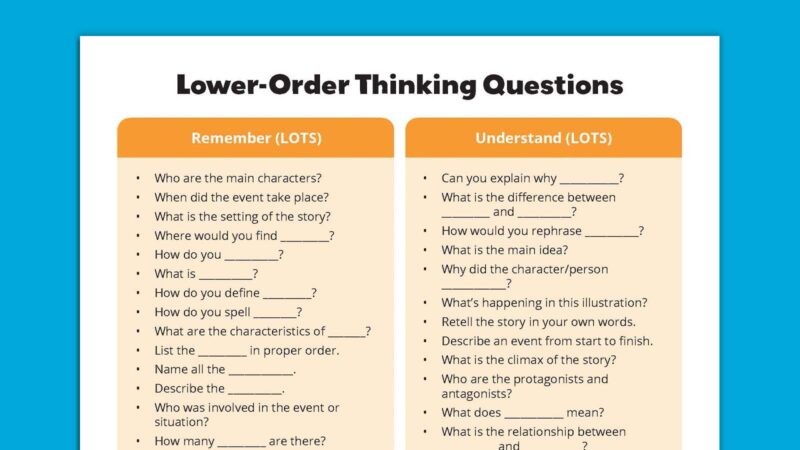
The bottom three levels of Bloom’s taxonomy are called lower-order thinking skills (LOTS). It is important to note that although these skills are considered lower on the pyramid, they are still very important. Think of these as the basic skills students must have to support their higher-order thinking. Questions like these help encourage children to use lower-order thinking skills.

Remember (a lot)
- Who are the main characters?
- When did this incident occur?
- What is the background of the story?
- Where will you find _________?
- How do you __________?
- What is __________?
- How do you define _________?
- How do you spell _________?
- What are the characteristics of _______?
- List _________ in correct order.
- Name all ____________.
- describe__________.
- Who was involved in the incident or situation?
- How many _________?
- What happened first? Next? The last one?
Understand (a lot)
- Can you explain why _________?
- What is the difference between _________ and _____?
- How would you rewrite __________?
- What’s the main idea?
- Why does the character/person ____________?
- What’s happening in this illustration?
- Retell the story in your own words.
- Describe an event from start to finish.
- What is the climax of the story?
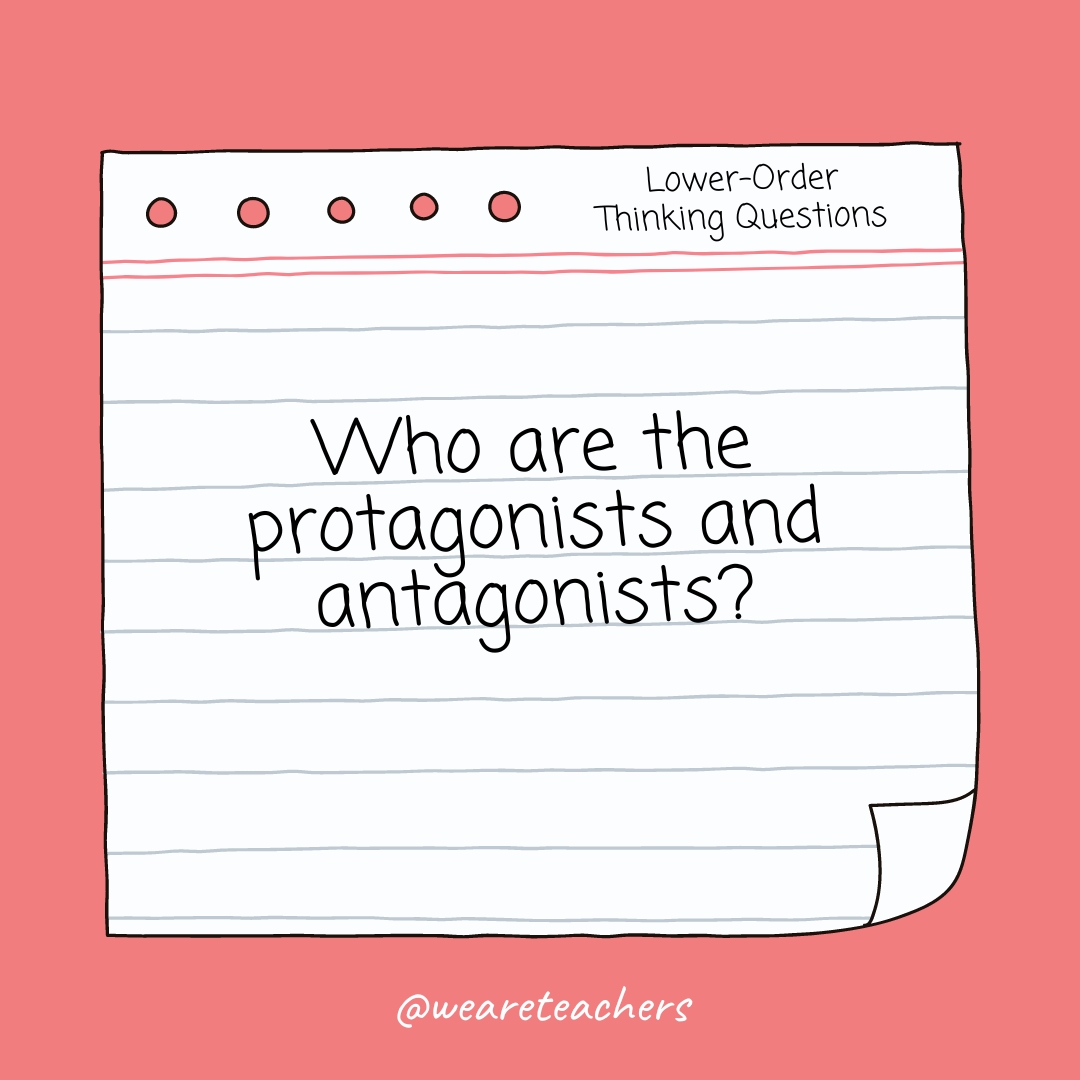
- Who are the protagonists and villains?
- What does ___________ mean?
- What is the relationship between __________ and ___________?
- Provide more information about ____________.
- Why is __________ equal to ___________?
- Explain why _________ causes __________.
Apply (large quantities)
- How do you solve___________?
- In what ways can you __________?
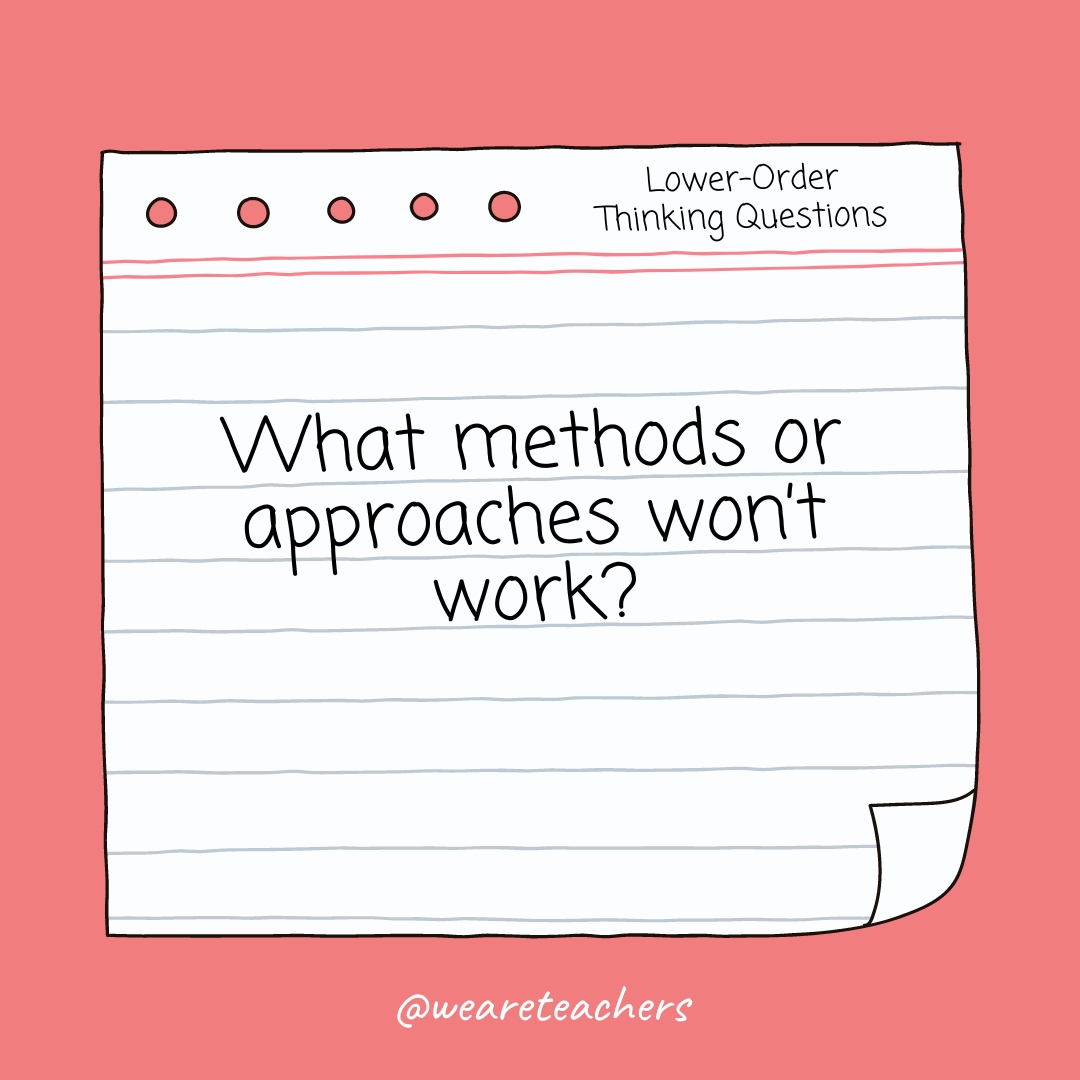
- What methods or approaches won’t work?
- Provide examples of _____________.
- How do you demonstrate that you are capable of __________.
- How would you use___________?
- Use what you know to __________.
- How many ways can this problem be solved?
- What can you learn from___________?
- How do you use ________ in your daily life?
- Provide facts proving __________.
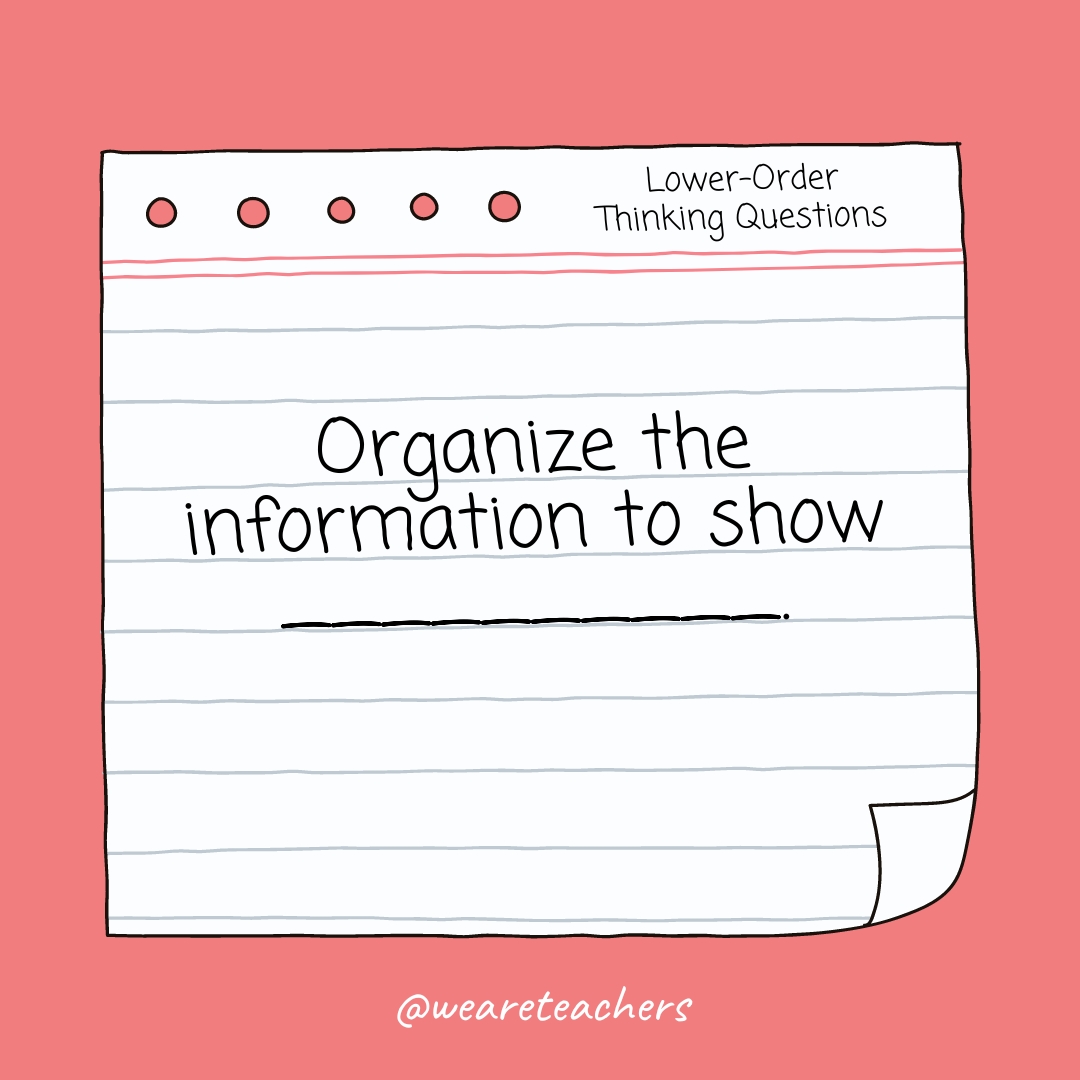
- Organize information to display __________.
- How would this person/character react if ________?
- Predict what would happen if __________.
- How do you know _________?
Higher order thinking skills questions
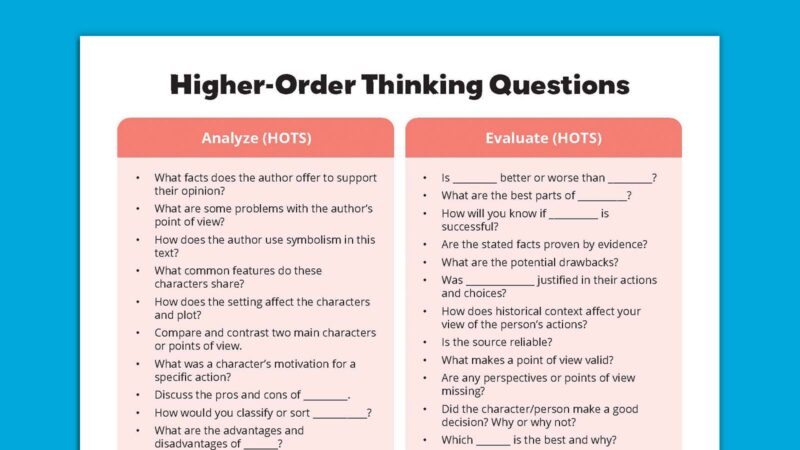
The first three levels make up higher-order thinking skills (HOTS), also known as critical thinking skills. When students use these skills, they delve deeper into information. Rather than simply accepting facts, they explore the reasons behind facts and establish cause-and-effect relationships. They evaluate the validity of facts and use them to synthesize new concepts, ideas, and inventions. Use these questions and topics to challenge your students to think critically about any topic.
Analysis (hot spots)
- What facts does the author provide to support their opinion?
- What are the problems with the author’s perspective?
- How does the author use symbolism in this article?
- What characteristics do these characters have in common?
- How does the setting affect the characters and plot?
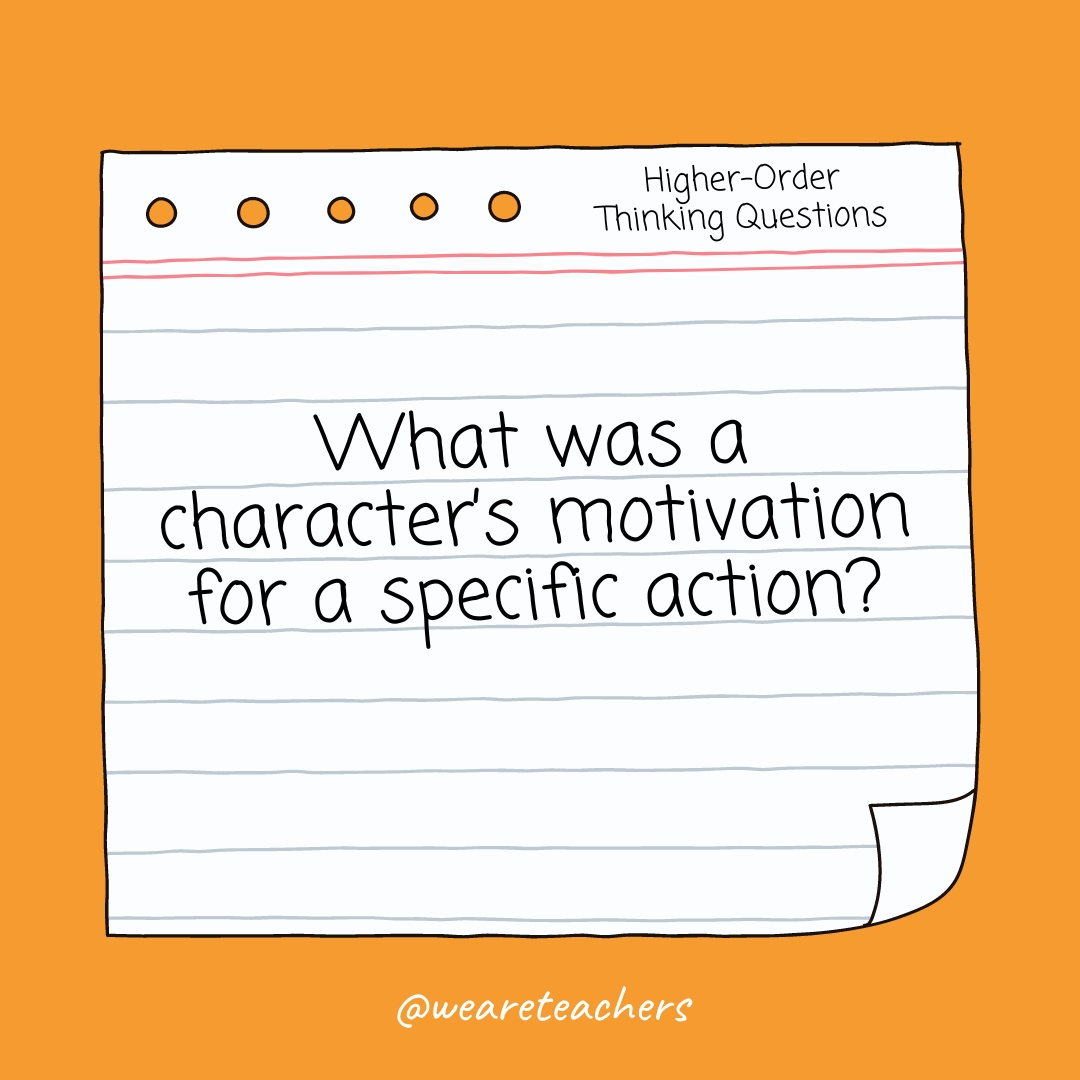
- What motivates a character to take a specific action?
- Compare and contrast two main characters or ideas.
- Discuss the advantages and disadvantages of _________.
- How would you classify or order___________?
- What are the advantages and disadvantages of _______?
- How is _______ connected to __________?
- What causes __________?
- What impact does ___________ have?
- How do you prioritize these facts or tasks?
- How do you explain _______?
- What patterns can you identify in the data, and what might they mean?
- Which method is most efficient for solving this equation?
- What conclusion can you draw using the information in the chart/graph?
- What does the data show or fail to show?
- What motivates a character to take a specific action?
- What is the theme of _________?
- Why do you think _______?
- What is the purpose of _________?
- What was the turning point?
Assessment (hot spots)
- Is _________ better or worse than _________?
- __________ What’s the best part?
- How do you know if __________ is successful?
- Are the facts stated supported by evidence?
- What are the potential disadvantages?
- ______________ Are their actions and choices justified?
- How does the historical context influence your view of this man’s actions?
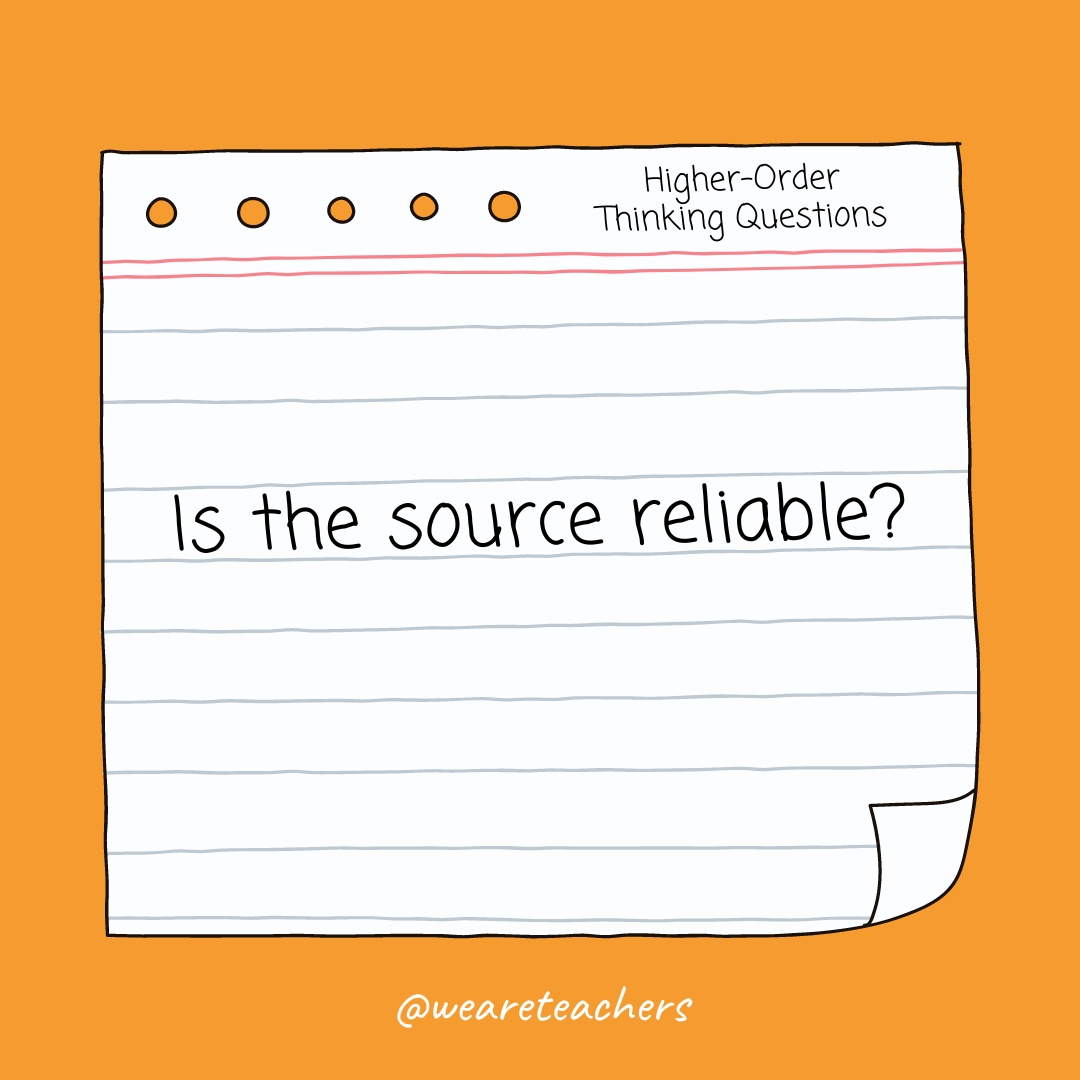
- Is the source reliable?
- What makes a perspective valid?
- Are there any ideas or perspectives missing?
- Did this character/person make the right decision? Why or why not?
- Which _______ is best and why?
- What biases can you spot in this article?
- How effective is the law or policy in achieving its objectives?
- What biases or assumptions are present in the argument?
- What is the value of _________?
- Is _________ morally or ethically acceptable?
- Does __________ apply equally to everyone?
- How do you rebut __________?
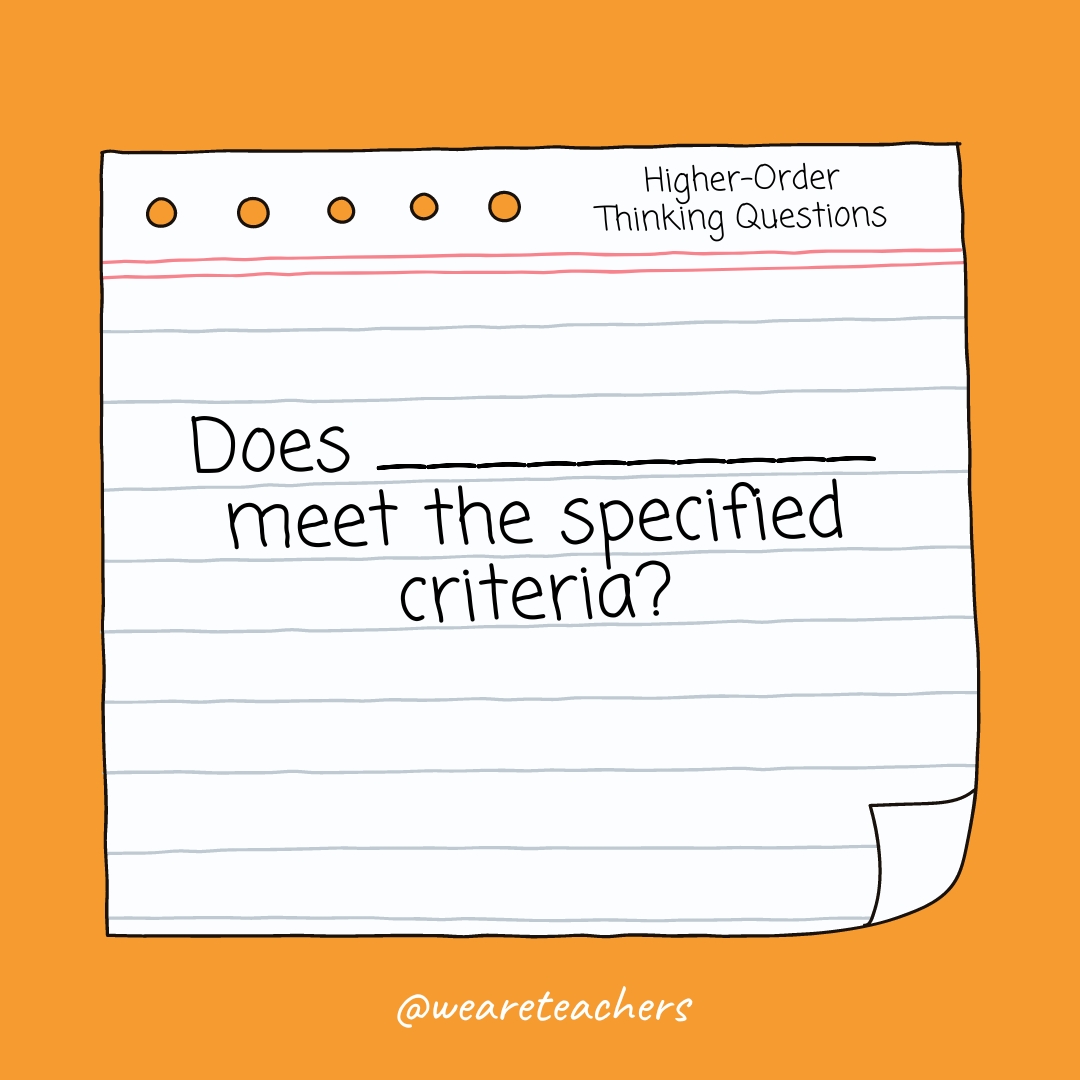
- __________ Does it meet the required standards?
- _________ What could be improved?
- Do you agree___________?
- Does the conclusion include all relevant data?
- Does ________ really mean___________?
Create (popular)
- How do you verify ____________?
- Design an experiment to __________.
- Defend your opinion about___________.
- How to solve this problem?
- Create a new character for the story, then describe their background and influences.
- How would you turn this story into a film? What changes would you make to the plot? Why?
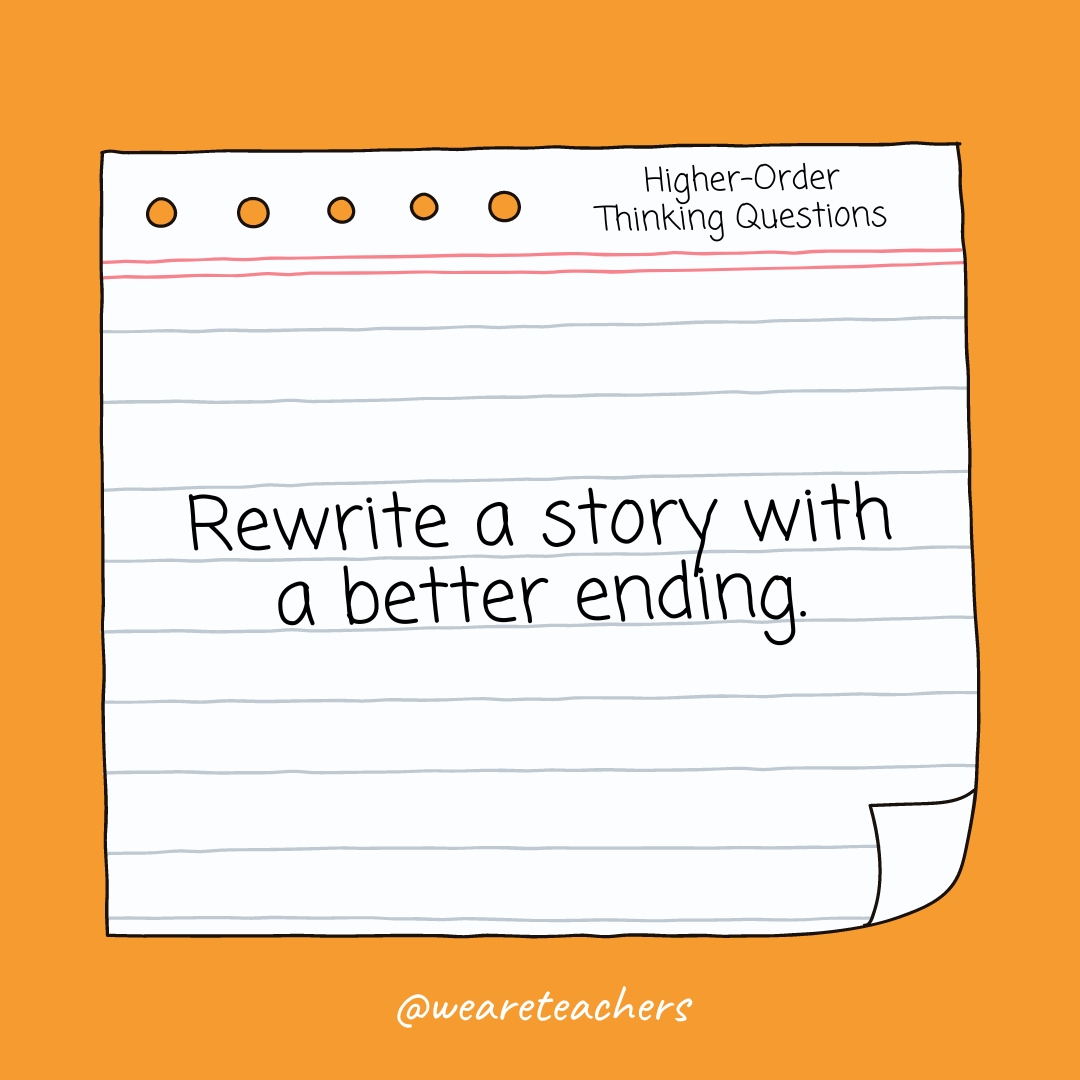
- Rewrite a story with a better ending.
- How do you convince someone to __________?
- Make a plan to complete a task or project.
- How would you improve __________?
- What changes would you make to ___________? Why?
- How would you teach someone _________?
- What would happen if _________?
- What alternatives can you suggest for _________?
- Develop a new policy to address a social problem.
- How would you handle an emergency like ____________?
- What solution do you recommend?
- What would you do differently?
- What are the next steps?
- How to improve the efficiency of this process?
- What factors need to change to __________?
- Invent a _________ to __________.
- What is your theory about __________?
Lower-Order and Higher-Order Thinking Skills FAQs
What is Bloom’s Taxonomy?
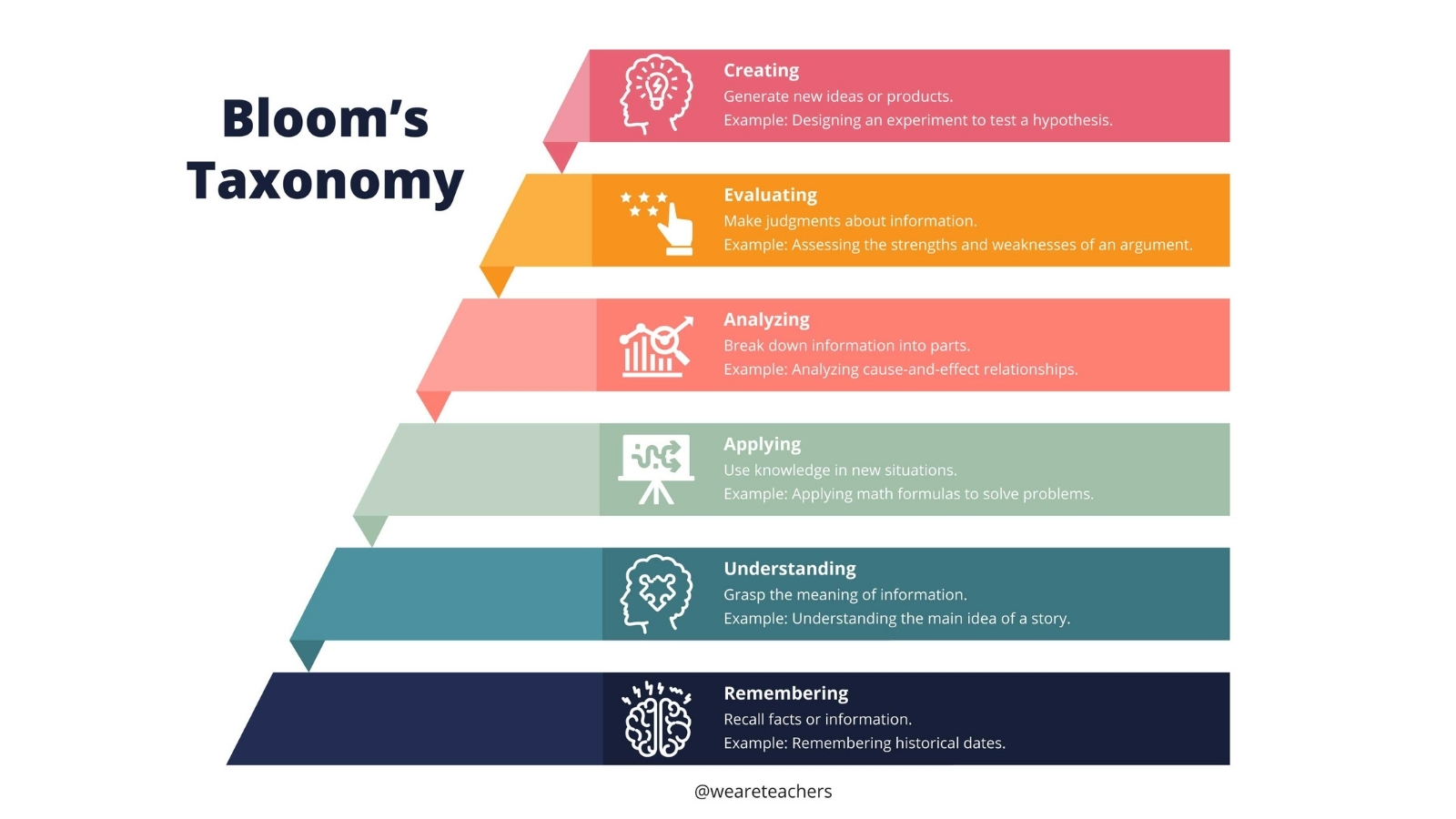
Bloom’s taxonomy is a way of classifying cognitive thinking skills. The six main categories—remember, understand, apply, analyze, evaluate, create—are divided into lower-order thinking skills (LOTS) and higher-order thinking skills (HOTS). A lot involves remembering, understanding and applying. HOTS covers analysis, evaluation and creation. Teachers use these categories to help students make strong, deep connections to the material as they learn.
What are higher-order thinking questions?
Higher-order thinking questions prompt students to make deeper connections with information. They also encourage children to think critically and develop problem-solving skills. That’s why teachers like to emphasize them in class. These questions often begin with a stem such as “What would happen if…?” or “Compare and contrast…”. Learn more about higher order thinking here.
Is higher order thinking more important than lower order thinking?
Higher-order and lower-order thinking work together to help students think intelligently and critically about any topic. Students must have strong lower-order thinking skills so they can retain information and understand its meaning. Only then can they analyze and evaluate more deeply, ask important questions, and transform what they have learned into something new and valuable. Teachers should emphasize these two ways of thinking in the classroom.
What are “LOTS” and “HOTS”?
These abbreviations are used to describe the six levels of Bloom’s taxonomy of cognitive thinking skills. LOTS stands for lower-order thinking skills, including memory, comprehension, and application. HOTS stands for higher order thinking skills, also known as critical thinking skills, including analysis, evaluation and creation. Teachers help students develop “multiple points” and “hot spots” and develop basic and critical thinking skills in the learning process.
How to use higher order thinking questions in the classroom?
No matter what subject you teach, higher-order thinking skills (HOTS) questions can help your students dig deeper into the material. These critical thinking questions encourage children to explain their reasoning, analyze information and use it to draw conclusions, and make connections between concepts. Try using these questions during a read aloud or as a journal or essay prompt. In math and science classes, these questions are great follow-up questions after a practice or experiment when students explain their ideas and explore their results. Every teacher in every grade can use HOTS questions with their students!
Get your free printable containing higher-order and lower-order thinking skills questions!
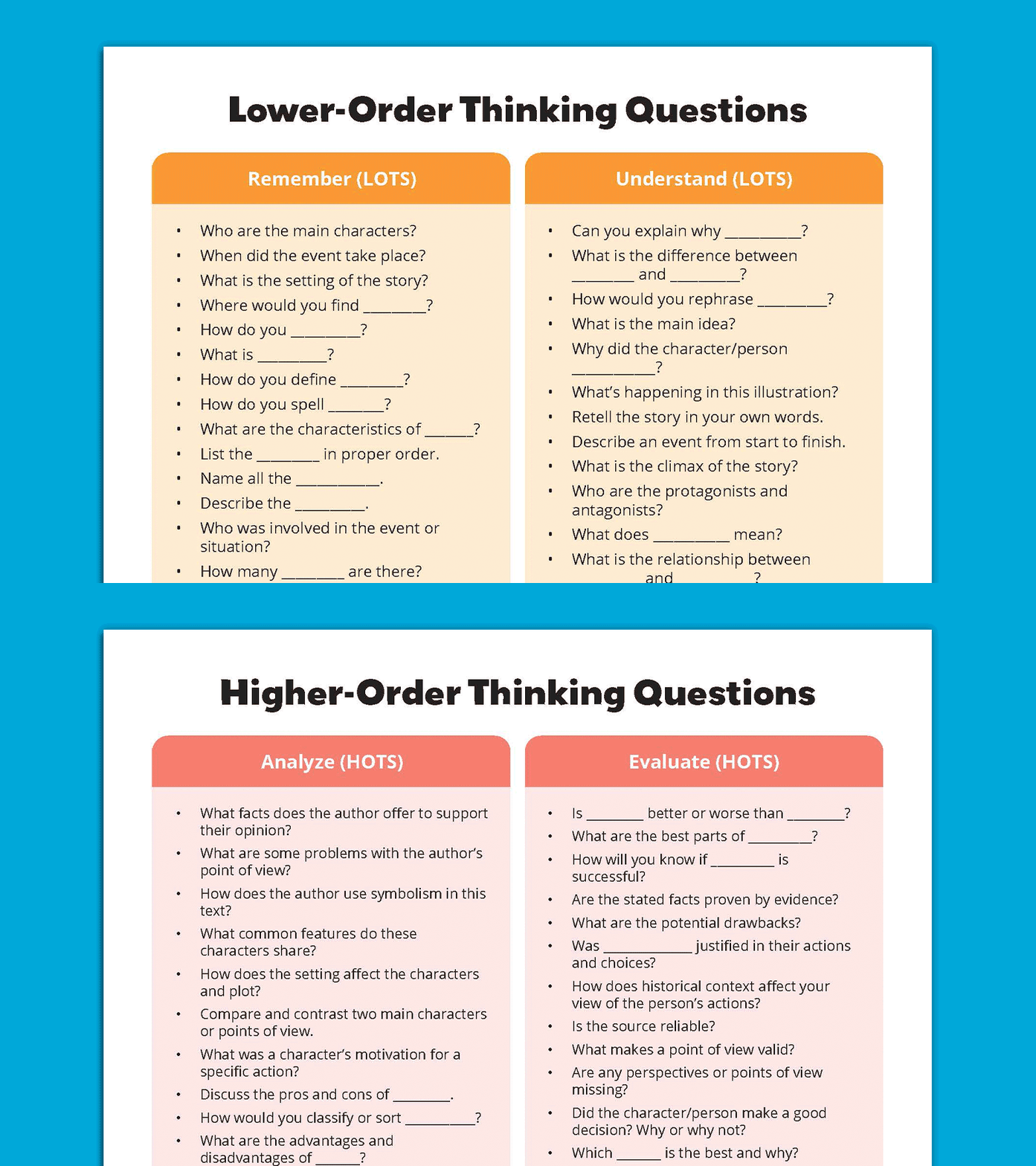
Simply enter your email address into the form on this landing page to get a copy of our printable form that contains all the higher-order and lower-order thinking questions above. It’s perfect to have on hand for use during lesson planning and teaching.


