

These days, when most people rely on email, text messages, or messaging apps to communicate, learning to write a friendly letter may feel a bit lost. But handwritten notes still have value, and it’s worth spending time teaching your children how to write them. This free stationery makes the whole process easy!
How to use stationery with students
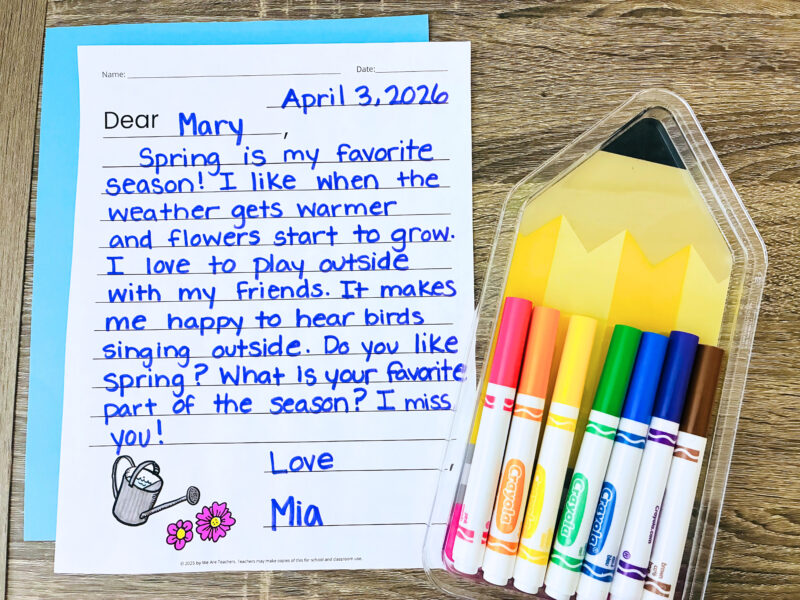
Looking for creative ways to get your students to practice writing letters? Try these ideas:
- Students were paired up and asked to write letters to each other. After they exchange and read, have them write responses as well.
- Exchange letters with students from other classes or grades. Set up a “mailbox” where children can drop off letters and create a “Postman” class assignment to deliver letters every day.
- Arrange a pen pal program with a student from another school. Tip: Join the We Are Teachers helpline group on Facebook to find co-teachers from other cities, states, or even countries!
- Have students write letters to their parents or guardians about upcoming school events rather than just sending flyers home.
- Write thank-you notes to school support staff (such as administrators, administrative assistants, bus drivers, etc.).
- Have students choose their favorite author or illustrator and write a note sharing how much they love that person’s work.
- Choose a favorite athlete, musician or actor and write a fan letter.
- Have students write a letter to a character in the book they are reading in class.
- At the end of the school year, students are asked to write a letter introducing themselves to next year’s teacher.
- Have students write a letter to themselves five years from now!
Letter Writing Paper FAQs
What is the correct format for a friendly letter?
A friendly letter includes a date, a greeting (usually using the other person’s name), body (the main message), a closing, and a signature. In handwritten letters, the greeting is aligned with the left margin, while the signature is usually aligned with the right margin. The body of the letter is written in indented paragraphs and uses casual language that reflects the writer’s personality. In the past, friendly letters were often written in cursive handwriting, although not all students learn this form of handwriting these days!
What is the difference between a friendly letter and a business letter?
Business letters contain some of the same elements as friendly letters but are more structured and formal. Include the sender’s address, date, and recipient’s address. These are usually aligned along the left margin, with a blank line between each one. The greeting can use the person’s title or full name and is also aligned with the left margin.
Do not indent body paragraphs in business letters. Instead, leave two blank lines between each paragraph. Justify the end left and leave four spaces for your signature. Finally fill in your full name and sign in the space between the end and your name.
Why should kids learn how to write friendly letters by hand?
When students write a letter by hand, they need to slow down and consider their choice of words more carefully first. This helps them create clearer communications that reflect their own personality and style. Even in today’s world, handwritten messages feel more personal and meaningful, making them a valuable way to strengthen relationships in school, home and the workplace.
Which grade level is letter paper best for?
This letter writing essay is best suited for primary school students who need a little extra support in using the correct letter format. It helps them remember dates, greetings, and closing words. (The latter two are important as they grow up and need to send professional communications like emails.) This letter writing template also encourages students to practice their writing skills so they can communicate clearly with others.
What other types of letters should students learn to write?
In addition to friendly letters and business correspondence, today’s middle school and high school students can benefit from learning to write professional emails. They should practice expressing their ideas clearly using complete sentences and spelling out words in their entirety rather than abbreviated “word speak”. Teach them acceptable greetings and closings and how to create a professional signature document.
Get your free stationery for kids now!
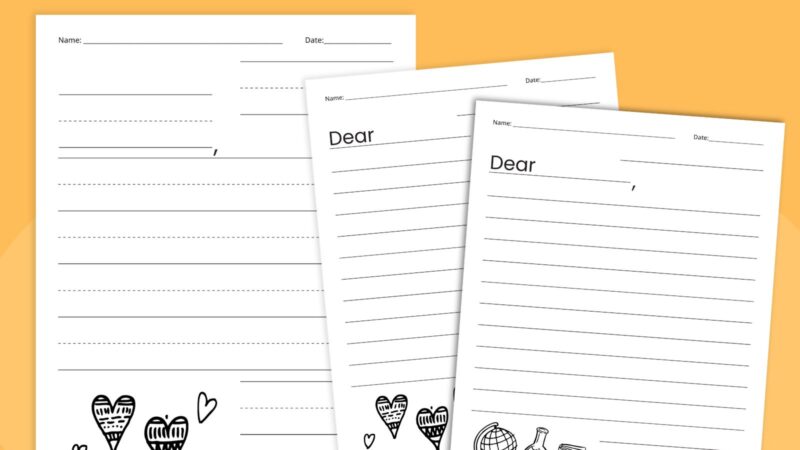
Simply enter your email information into the form on this page and you’ll have instant access to this free printable for your students to use.


