

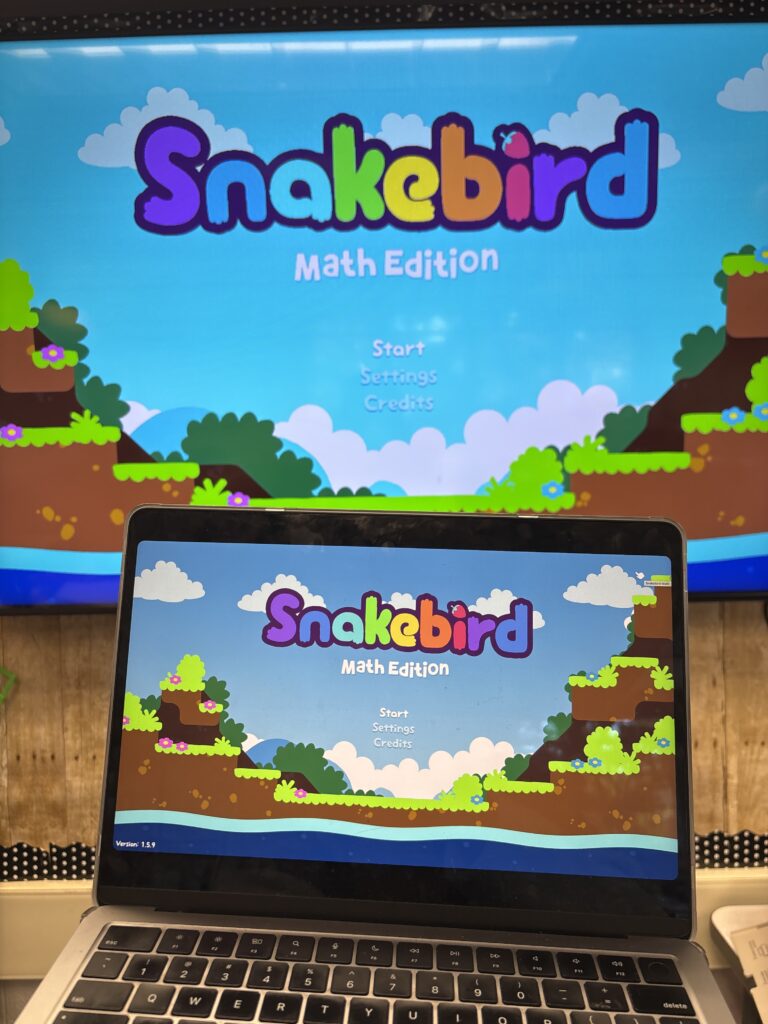
Snakebird is a visually engaging, interactive math puzzle game from PlayMath.org. Designed for elementary school students, especially grades 3 to 6, Snakebird challenges children to use strategy, spatial reasoning, and understanding of positive and negative numbers to solve increasingly complex puzzles.
Instead of relying on rote learning or repetitive exercises, students guide a colorful, snake-like bird through a series of obstacles, using mathematical concepts to navigate and complete each level. The site is completely free, has no ads or timers, and offers a fun, intuitive approach to math. Students are not given step-by-step instructions; instead, they are encouraged to tinker, experiment, and learn through trial and error, making math feel like a creative adventure rather than a chore.
We asked California fourth-grade teacher April Archer to share her experience using Snakebird in her classroom. She is in her fifth year of teaching and is always looking for ways to make math more engaging and meaningful to her students.
Here’s what April had to say about the game.
Why did you want to review the Snakebird game?
I chose to review Snakebird because it goes beyond basic math exercises. It requires real problem solving, strategy and collaboration. Snakebird solves a common challenge in upper elementary school math: helping students develop spatial awareness and a deeper understanding of positive and negative numbers. I have witnessed firsthand how my students energize when faced with difficult problems and work together to find solutions. The game sparks lively classroom discussions, encourages a growth mindset, and makes math fun. My students are very engaged and often say things like “I finally get it!” And help each other get through more difficult levels. To me, Snakebird is more than just another math game, it’s a powerful tool for building confidence, collaboration, and mathematical thinking in the classroom.
Which grade level do you think Snakebird is best suited for? Why?
I think Snakebird is best suited for children in grades 3-6. Students will have the greatest success if they understand positive and negative numbers. As the levels increase, both numbers are required to complete the level. This age group will also have more strategy and spatial awareness, which will also help them complete levels.
Do you see any examples of games that meet your class’s specific criteria?
When I searched through all the games on PlayMath.org, I found games about multiplication, fractions, number lines, and place value.
- multiplication
- 4.OA.1-3: Interpret multiplication equations as comparisons; use multiplication/division to solve multi-step word problems.
- 4.NBT.5: Use strategies and algorithms to multiply up to 4-digit numbers by 1- and 2-digit numbers.
- Fraction
- 4.NF.1-4: Compare fractions with different denominators; add and subtract fractions; multiply fractions by whole numbers.
- number line
- Use a number line for fractions and measurements (e.g. line graphs).
- place value
- 4.NBT.1-3: Identify place values in multi-digit numbers; compare, round.
Key Practices for Grades 3-6
- Use visual models (arrays, number lines) to build conceptual understanding.
- Emphasis on reasoning about fraction magnitude and equivalence.
- From concepts to procedural fluency, apply multiplication and division algorithms step by step.
How do you use Snakebird in your classroom?
I primarily use PlayMath.org as a differentiated learning tool to supplement my core math instruction. I use Snakebird as a warm-up for math puzzles. Our class did a puzzle and I asked the students to go in front of the TV and explain their reasoning. I love hearing my students talk about their problem solving and strategies. I also use it as an early completion option – my students appreciate it when I give them new and different options. I particularly like this game because it’s more than just practice, it requires participation and problem solving.
How have your students responded to the games on PlayMath.org?
My fourth grader is very engaged and loves trying new things. One group of students said some of the puzzles were difficult but fun. I remember hearing students say, “I finally get it!” I loved their growth mindset and that they didn’t give up on the more difficult puzzles. I love seeing my students helping each other.
How would you sum up your overall experience with this site?
Outstanding! Navigating the website is very easy. My students are very engaged in this game. They really enjoy the challenge of puzzles more than basic math exercises. I love that the entire site is ad-free. It made my life so much easier and made it feel more like an educational experience.
Is it easy to use and implement Snakebird in your classroom?
Very easy! I posted the link on Google Classroom, but some of my students were able to easily type PlayMath.org into the search bar. A website like this is much more accessible than a specific app that requires my students to log in multiple times.
What other games on PlayMath.org do you like?
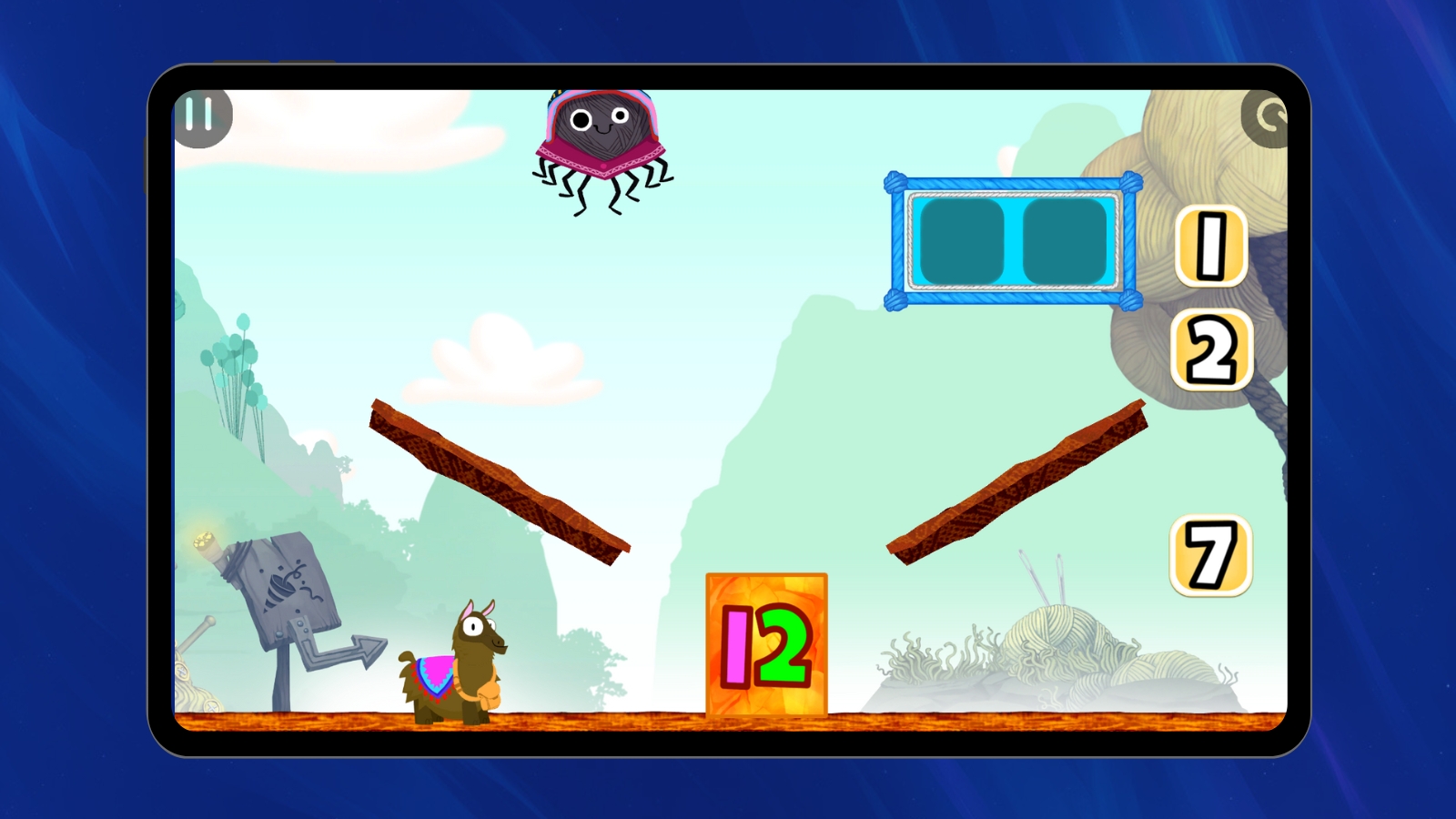
Big Numbers: This is challenging for kids, but not too hard, and it’s a really great space to learn in. I love that it helps my students create number bonds and base ten cubes.
What is special or unique about PlayMath.org compared to other websites you use in the classroom?
Other websites I use in class require a Google login/password/class code. I love that there are no extra steps for students to access PlayMath.org. Students don’t spend time entering usernames, passwords, etc. Other sites focus on basic practice skills, but I love the strategy, logic, and reasoning these games require. I also love that all teachers can access this site because it’s free.
How will PlayMath.org save you time or make teaching easier?
My students will save a lot of time and can easily log into any PlayMath.org game. The entire website is very easy to navigate. This will make my teaching easier as I can reinforce and review key subject areas.
Teacher Picks is a sponsored program provided by We Are Teachers. All opinions shared in reviews are honest and based on the direct experience of teachers. To learn more about our guidelines and review process, click here.


